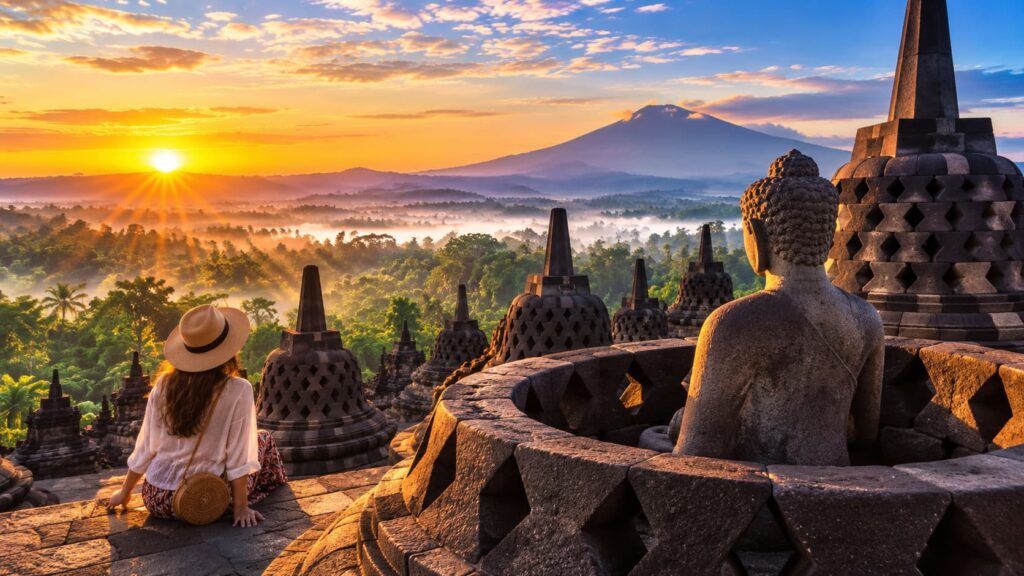
For anyone curious about the wider world, its cultures, its history, and the astonishing things human societies are capable of building, few places on Earth rival Borobudur. Rising from the lush green valleys of Central Java, it is the largest Buddhist temple in the world, and standing before it is genuinely humbling.
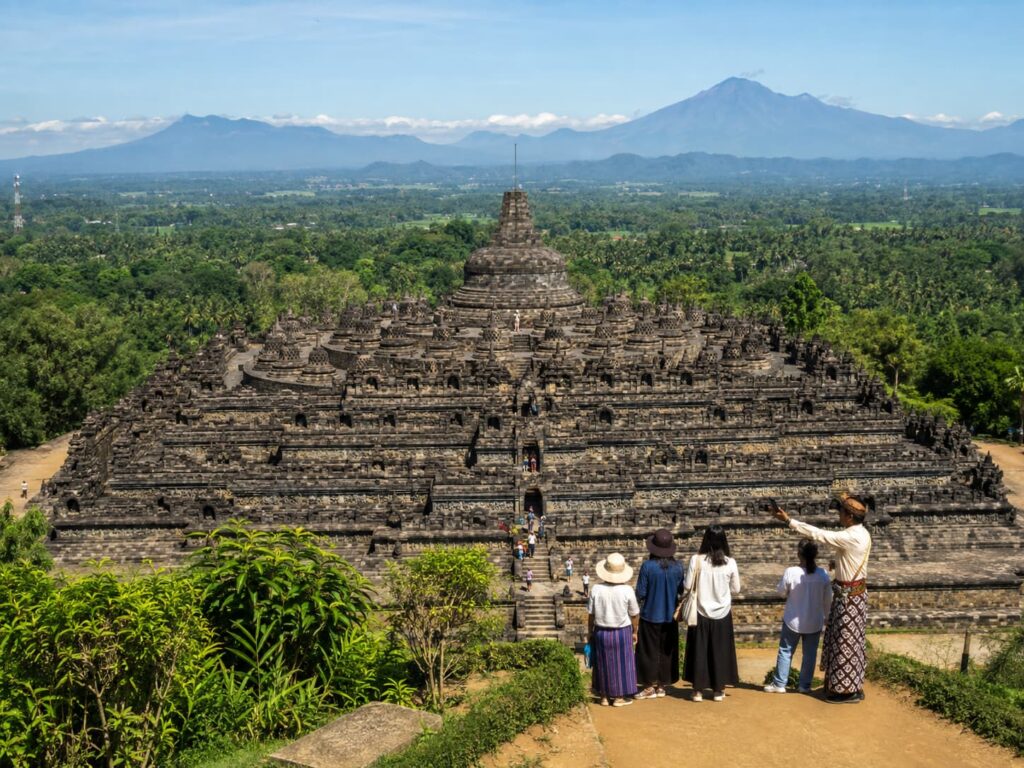
Built in the 9th century from some two million blocks of volcanic stone, this colossal monument is arranged as a giant three-dimensional mandala and carved with more than 2,600 storytelling relief panels and adorned with hundreds of Buddha statues. An entire civilization raised it by hand, then it was lost for centuries beneath volcanic ash and jungle, rediscovered, and painstakingly restored. Today it stands as a carefully protected treasure of humanity, and visiting it is one of the richest forms of education a traveler can find, a lesson in history, faith, art, and human achievement all at once.
How you experience it depends on your interests and your schedule. One thing to know up front, though: the rules have changed.
To protect this priceless site, access is now tightly managed, much like any shared public resource requires careful protection. You can no longer simply wander up the monument, so a little planning is essential. Here are the best ways to experience it, ranked.
1. Compare and Book It All in One Place
Borobudur now requires timed, guided tickets to climb the structure, with a strict daily cap, and it pairs beautifully with Prambanan, sunrise viewpoints, and other Central Java sights, all through many operators. Sorting that, and making sure your ticket actually lets you climb, is genuinely confusing. Borobudur Temple Tour is a platform built around this destination, so instead of guessing you get the options laid out clearly with the right ticket type and timing sorted.
The value is that it handles the parts that trip people up, especially securing the capped climbing ticket and a certified guide, and pairing the temple with Prambanan or a sunrise experience. You can weigh a simple visit against a full-day cultural tour, and book reputable operators.
You can compare Borobudur tours here and lock in your climbing slot before it sells out, which matters more than ever under the new system.
Best for anyone who wants a sorted trip without the ticketing headache. If you already know your plan, book directly.
2. Climb the Monument: The Guided Ascent
This is the heart of the experience, and it is now a guided one by design. To climb Borobudur you book a Temple Structure ticket, which includes a certified local guide and special woven sandals you wear to protect the ancient stone. Ascending its nine stacked platforms is a symbolic journey, from the carved scenes of earthly life at the base, up through the realms of form, to the serene, bell-shaped stupas and the formlessness of Nirvana at the summit.
A guide transforms the visit, decoding the thousands of relief panels and the meaning woven into every terrace. Without that context, it is a beautiful pile of stone; with it, it becomes a story you walk through.
Climbers are capped at a strict daily limit across timed slots, and morning slots sell out days ahead in peak season, so book early.
Best for every visitor. This is the unmissable core of Borobudur.
3. The Dawn Experience: Sunrise at Borobudur
Dawn here is the stuff of bucket lists, with mist pooling in the valleys and volcanoes glowing on the horizon. Direct sunrise access on the monument itself was scaled back years ago and now exists only as a limited, premium experience booked directly, with a tiny daily quota. Many popular sunrise tours instead take you to the nearby Setumbu Hill, a viewpoint that looks out over Borobudur and misty Mount Merapi as the sun comes up.
Either way, the early start rewards you with soft golden light, cooler air, and a serenity the midday crowds never see. It is unforgettable.
Just be clear when booking whether your sunrise is on the temple or from the hill viewpoint, since they are very different experiences at very different prices.
Best for photographers and early risers chasing that magical first light.
4. The Bigger Picture: Prambanan and the Temple Combo
To understand ancient Java, pair Borobudur with Prambanan. Just across the region sits this magnificent 9th-century Hindu temple complex, another UNESCO World Heritage Site, its towering, intricately carved spires a striking contrast to Borobudur’s rounded Buddhist form. Seeing both in a day reveals how Buddhist and Hindu civilizations flourished side by side here. The smaller Mendut Temple near Borobudur is a lovely add-on too.
This combination is the classic Central Java cultural experience, and it deepens your appreciation of both monuments enormously.
The two sites sit on opposite sides of Yogyakarta, so allow for around 90 minutes of driving between them and plan the timing carefully.
Best for history and culture lovers who want the full picture.
5. Beyond the Temples: Yogyakarta and Mount Merapi
Give yourself time for the wider region, too. Yogyakarta, the cultural soul of Java, rewards exploration, from the Sultan’s Palace and traditional batik workshops to the buzzing Malioboro street. Looming nearby is Mount Merapi, one of the world’s most active volcanoes, where jeep tours rumble across its dramatic lava fields.
Rounding out your temple visit with the living culture and raw landscapes around it turns a day trip into a proper journey into Java.
These add a day or more, so they suit travelers with time to linger rather than those on a tight schedule.
Best for travelers who want to experience the region, not just the monument.
A Few Practical Things Before You Go
Book ahead, and book the right ticket. Climbing Borobudur requires the guided Temple Structure ticket, and daily numbers are strictly capped, so morning slots vanish days in advance in peak season. Double-check that any tour you book actually includes climbing access, not just ground-level entry.
Time it for the dry season, roughly May to October, for the clearest skies and best sunrises. Getting there from Yogyakarta takes around an hour or so, and for a sunrise start you will want a private car and driver, since public transport does not run that early. Dress respectfully, as this is a sacred Buddhist site with an enforced dress code covering shoulders and knees, and you will change into the provided sandals to climb.
For background, UNESCO’s page on the Borobudur Temple Compounds is well worth a read, and the official Wonderful Indonesia site helps with planning. Both pair well with any related travel and cultural guides already on the site.
Choosing the Right One for You
Borobudur rewards visitors who plan ahead and come curious.
Start by comparing your options through Borobudur Temple Tour so you secure a climbing slot and a good guide. Here for the monument itself, take the guided ascent and let the reliefs come alive. Chasing the magic hour, choose a sunrise experience and confirm exactly what it includes. Wanting deeper context, pair it with Prambanan. Craving the full journey, add Yogyakarta and Mount Merapi.
However you do it, come with your curiosity switched on. To stand atop a 1,200-year-old wonder that a whole civilization built, lost, and lovingly reclaimed is to feel connected to the vast, shared story of humanity. For anyone who loves learning how the world came to be, there are few finer classrooms on Earth.
Author note: recommendations here reflect Borobudur’s access rules and tickets as of 2026. Prices, climbing quotas, and sunrise arrangements change, so confirm the current details and book ahead before you go.
1/2